

Three weeks at Wimbledon
The highs, lows, and lessons from three weeks spent inside tennis's most iconic tournament.

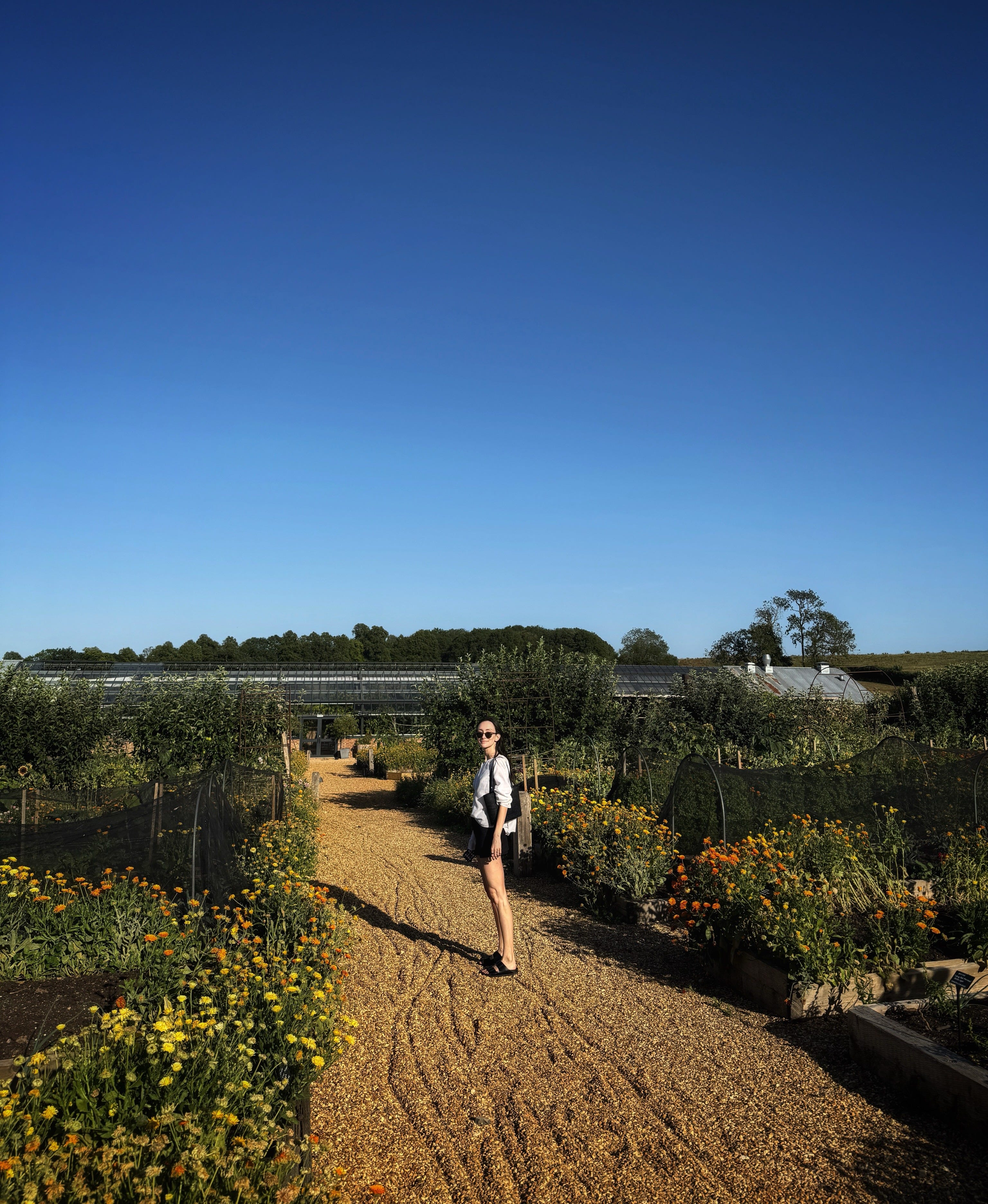
I just capped off three weeks at Wimbledon that involved nearly every stage of grief (at least twice), with a sprinkling of pinch-me moments that kept me holding on.
When I booked this trip, I apparently blacked out and forgot who I am: a creature of routine, a homebody, someone who needs at least 24 hours to recover from any social activity. I’d had so much fun during my one-week sprint at Roland-Garros that I conveniently forgot I was absolutely exhausted by the end of it, the amnesia convincing me that three weeks in London would pack an even greater punch.
It did. Just often to the gut.
Every major tournament is preceded by a week of parties, often ripe for networking which, I’m afraid to say, really does pay off. I flew out early so I could make it to Miu Miu and New Balance’s event celebrating the launch of their second collection with Coco Gauff. I’ve had the luxury of getting to know many of the main players in the tennis apparel space over the past year, and the New Balance team is far and away the nicest and most welcoming. Plus, their designs are consistently some of the best on tour and the way they use their star players, Coco Gauff and Tommy Paul, is especially savvy—hence me deeming them the most culturally relevant brand in tennis.
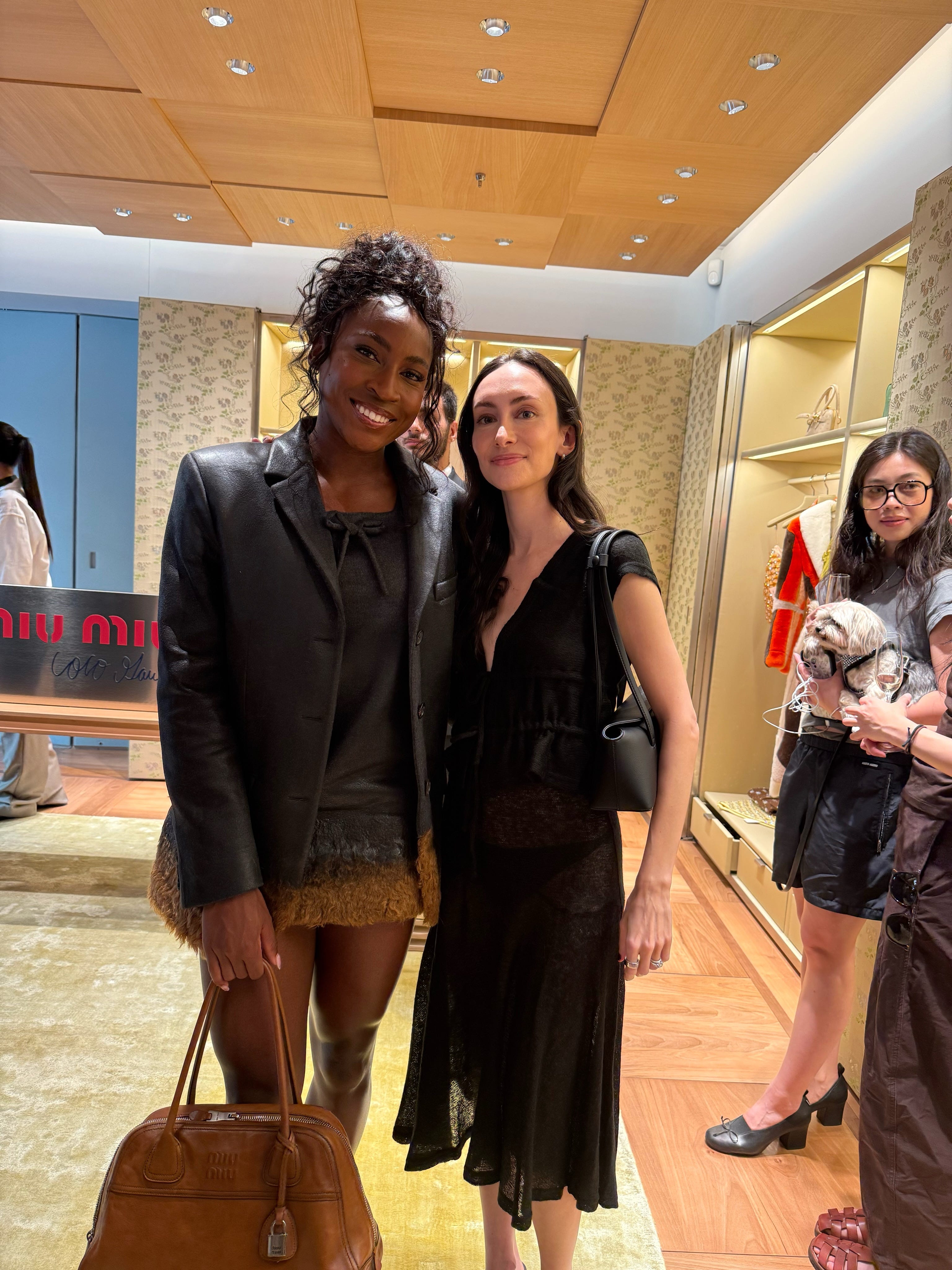
The party was teeming with London influencers angling to seem like the coolest, most unaffected people in the room, causing a momentary panic until I spotted Evan Zeder, the brand’s senior global director of sports marketing, in a corner with some colleagues. Finally, a face I knew, and just as we were chatting, the lovely author Sunita Kumar Nair swooped in to say hello. We had recently Zoomed to discuss her amazing coffee table book ACES, which is something of a bible of tennis fashion, hailing all the way back to Suzanne Lenglen and Jean Patou. She was with her teenage son, a sweet boy with nonchalant (and thus very cool) style who, like every teen on Earth, found his vibrant mother embarrassing. I tried to explain to him how lucky he is to have her—the jury’s still out on whether it worked.

Coco arrived dressed in a leather dress and matching jacket with feathered edges from Miu Miu’s fall 2026 collection, launching straight into a series of posed photos and videos like a pro, and signing tennis balls at warp speed. Evan brought her over to meet me and she told me she loved Hard Court—that it was hard for even her to keep up with all the latest tennis happenings—and I pretended that that didn’t blow my mind. We chatted about the highs and lows of tennis press conferences, I wished her the best this “fortnight” (a word I still don’t understand), and slipped out to meet with Ben Rothenberg for an impromptu dinner to discuss a collaborative story.
We were on Bond Street, known more for its shopping than cuisine, so snuck into the first restaurant with AC that we could find, one that was a hilarious study in British Maximalist design. It was an appropriate first meal out for my trip, in a space that felt like I had fallen down the rabbit hole in Alice in Wonderland. We ate subpar salads and fish while discussing the mystery of Serena Williams and Wilson’s racket partnership and decided to move forward with a story, a decision that would cause me a little more duress than I’d imagined.
The next day I took calls and did some work from my too-small, too-hot hotel room before heading out to a party held by the WTA and TikTok and hosted by Amanda Anisimova at some posh member’s club where photos weren’t allowed. I got to meet a bunch of WTA team members I had spoken to from afar, and said hello to Amanda, who told me about her white dress designed by David Koma, who attended the party alongside her. It was another small signal of the WTA’s growing fashion ambitions.
Then I was off to a party for Jack Draper’s collaboration with Axel Arigato, held in a small pub with no air conditioning which was cool in theory, but not practice, for someone as highly sensitive to temperature changes as me. I escaped the thick air to meet my Internet friend Guy Bingley, who writes the wonderful, and too-slept-on Substack, Game Tape, which reviews sports documentaries with beautiful prose and painstaking research. We’ve bonded over the past year due to our shared health struggles, and it was refreshing to have a deeply honest chat about the reality of living in bodies increasingly out of our control, that give us constant grief and make moving through the world much harder than it once was. He helped me make my way ‘home’ on the steamy tube (minus one for London) and I felt incredibly grateful for the gifts, in human form, that Substack has brought me.
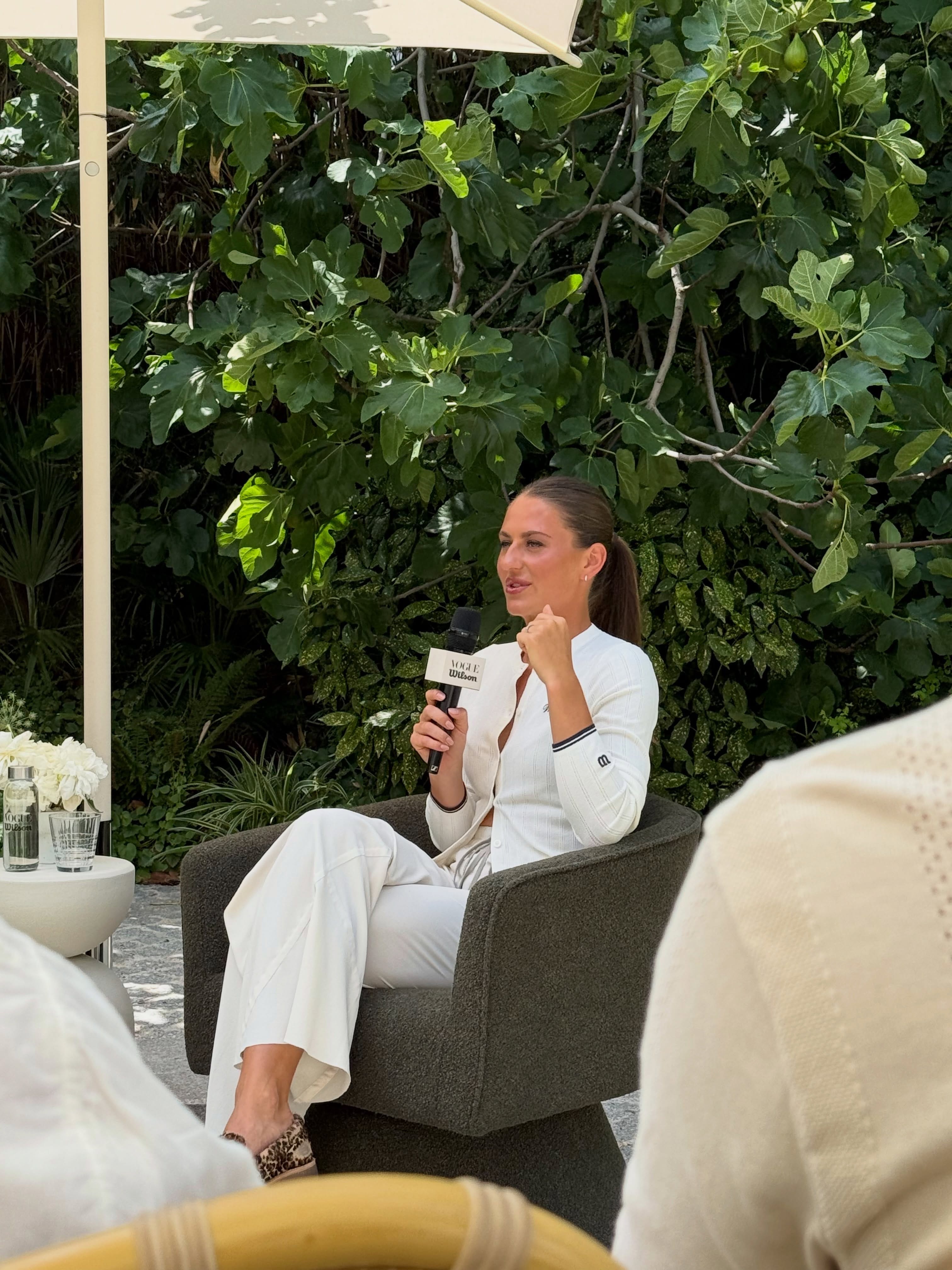
At the end of that first week I went to a garden party celebrating Wilson’s custom kit for brand muse Marta Kostyuk, where she and the brand’s global chief creative officer, Joelle Michaeloff, talked about their close collaboration over the years. I think Michaeloff is one of the smartest activewear designers in the biz and listening to her talk is always a treat. But it was scorching hot and I hadn’t been sleeping well in my poorly air-conditioned hotel, so I was frazzled. The story we had written about Wilson and Serena hadn’t gone over well with the brand, despite being fairly benign from my vantage point, and I found myself needing to smooth things over on little sleep.
It crystallized something tricky about this business—the traveling tennis circus. Befriending people who work for companies you write about, and not always in ways they appreciate, is hard. I try my best to operate with integrity. I have no interest in writing something negative for the sake of it; that kind of journalism has never appealed to me. But I also believe good-faith criticism is part of the job.
The reality is that journalism and relationship-building often pull in opposite directions. One asks you to preserve access, the other asks you to tell the truth as you see it. Learning to live in that tension, while treating people with respect, feels a little like stepping onto a balance beam after years away from gymnastics. Wobbly at first, but necessary.

This was a small stumble, and thankfully one that has since been smoothed over. Even so, it taught me something I’ll probably carry with me long after this trip.
After a week of event-hopping, it was time for my Wimbledon orientation. I expected to have a religious experience when I stepped foot on The All England Lawn and Tennis Club, in the same way the sounds of players hitting at the US Open last year brought me to tears because it represented something much more than tennis to me—a neon yellow light in my neverending tunnel of chronic pain.
When I went to grab my credential, one of the young staff recognized me (something I still can’t wrap my head around) and told me they loved Hard Court. It would happen five more times throughout the tournament, acting as a little buoy when it felt like the walls were otherwise closing in. Once I got on the grounds, I surveyed the beautiful greenery, as described, and the air felt thick with legacy. But the press room, despite its poor AC, was chilly, run by people who had no desire to make you feel welcome unless you’d been coming there for years. Basic requests were met with a look of disdain and the sense that they really didn’t have the time to be speaking to you. Some of my journalist colleagues who have been in the tennis world much longer recommended I ask the staff for help with X, Y, or Z, noting it had always worked for them. But when I politely asked for the same assistance, the staff scoffed in disgust, as if I was asking for a red carpet to be rolled out in front of me.
I was credentialed for Vogue (because the power of Substack has not yet made its way to England, even for a few ITWA journalists), where I had recently interviewed the world No. 1, Jannik Sinner, and written an exclusive story on Naomi Osaka’s walk-out look, causing me to wonder what more I needed to do to prove my worth in the eyes of the AELTC, or at least get a modicum of respect. Over the course of two weeks, I would come to realize there was nothing I could do. Fresh blood was often treated as entitled, journalism experience mattered less than seniority within this particular ecosystem, and there was a lingering sense that tradition still trumped curiosity. Despite its inarguable beauty, Wimbledon sometimes felt like a microcosm of everything holding tennis back—so many people clinging to an ultra-exclusive version of the sport while the rest of tennis was busy imagining what comes next.
I recalled an agent friend telling me it was their least favorite tournament, and I began to understand why. Everything was made more difficult than it needed to be, down to players requesting transportation. For media, one-on-one interviews were limited, even for some of the top publications. Getting to and from the tournament was a slog—either a 20-minute walk to an overheating tube, a walk on which I regularly saw elderly folk collapsed on the ground in exhaustion, or a 30-minute wait for a car that would then move at the speed of a dripping faucet through traffic. I attended as a spectator a few days and found it similarly uninspiring—overcrowded and difficult to move around the grounds, with bland food on offer. They take your tickets when you enter the stadium, so if you want to leave and come back to, say, pee or grab a drink, you have to track your ticket back down—a completely inane exercise somehow meant to limit ticket knockoffs. There’s got to be a better way…
What made my time at Wimbledon enjoyable were the people I got to spend time with or meet after months of operating like pen pals. The Australian Open crew represented everything that’s right with tennis today, so welcoming, warm, and in touch with how today’s audiences consume media. After weeks of being made to feel small for no reason other than some people’s love of a power trip, talking to them reminded me that I did, in fact, belong in this sport. Techie Sean and I spent an entire afternoon chatting away in the media cafeteria, immediately on the same wavelength, and then he brought me to meet the legend Jon Wertheim, who’s been so kind and supportive of Hard Court from afar. I learned that, like a true journalist, he talks in a constant whisper, as if everything he’s saying is a secret, and it endeared me to no end. Steve Zacks and I talked shop and interesting storylines on the media patio, while a stranger brought me the good sushi from the player’s lounge (forever indebted to you, random man). I fell hard for Rachel Stuhlmann, an OG tennis influencer and a girl’s girl in the truest sense. The hilarious and absurdly handsome Nick McCarvel kept me company in the media seats on Court 1, while the brilliant writer Caira Conner and I went from acquaintances to fast friends after commiserating over traveling with chronic pain and other annoyances that shan’t be shared here. The US Open better watch out for us (no it shouldn’t, we’ll be limping and laughing until we cry into our Coqodaq).
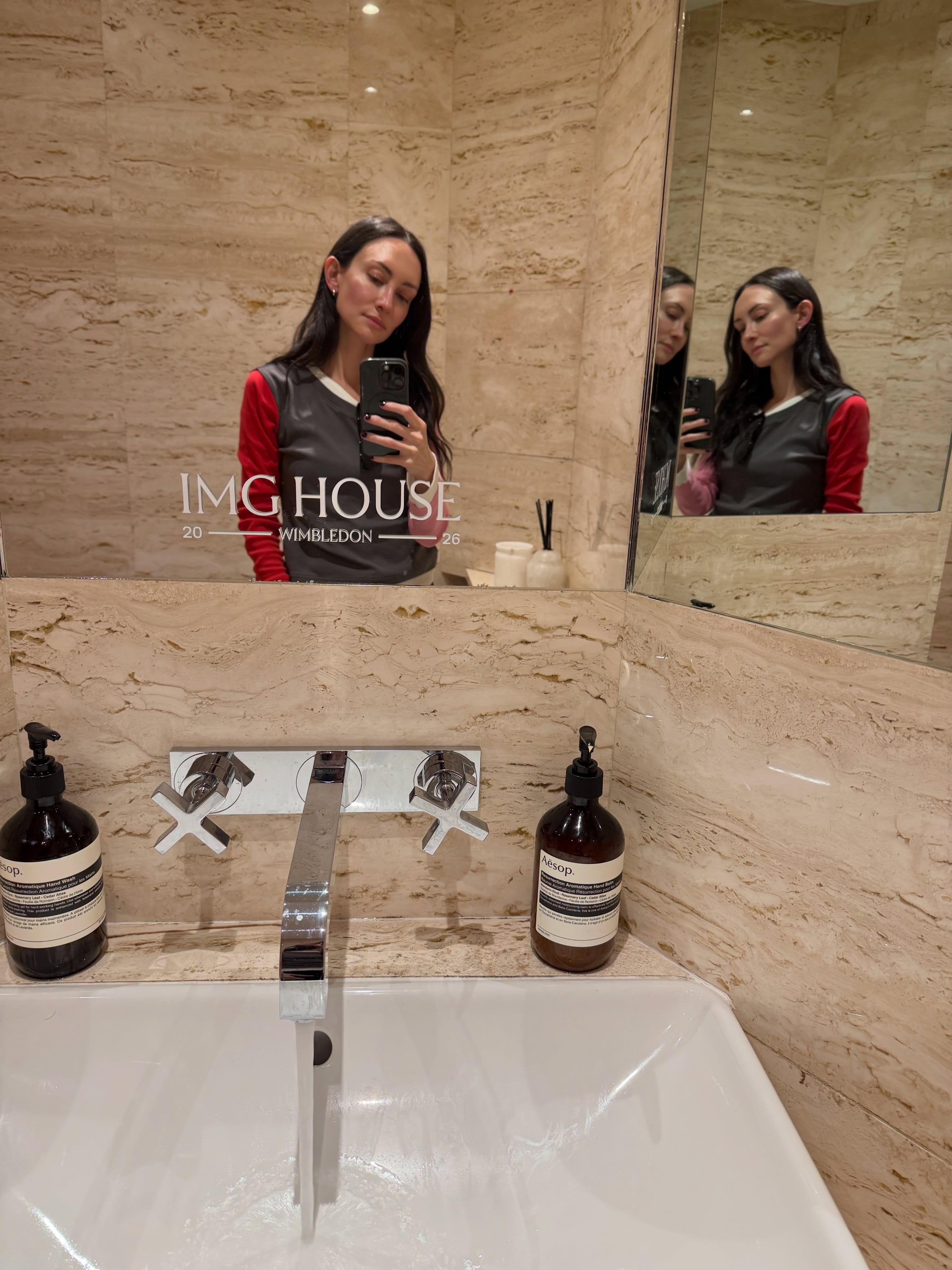
The IMG House was like a toy store for adults, filled with the most delicious food and drinks to be enjoyed over top-tier people watching. It was a nice little refuge from the stiff-upper-lips. If I named the people I spoke to there, I’d have to kill you, but in one particularly funny moment, a high-profile agent called his mother on speaker phone to ask her for neck pain tips after I told him about my enduring struggles with chronic pain. Trust me when I say it was a real WTF-is-my-life moment. While there, I also got to meet the lovely Madison Appel, a tennis influencer whose content I really enjoy and who, despite being down-to-earth, seemed like she could command any room she walked into. In a sea of blands, she has real star power.
In between my treks to and from SW19, I sought out massages for my searing facial pain and felt the tension melt away under the hands of Ksenija at Big Beauty in Hackney and Naz at the Revive Room in the back of Nelson’s Homeopathic Pharmacy, who told me, accurately, that “there’s a lot going on with your neck.” Under the tuning forks, I discovered that I don’t really know how to breathe without tensing up, which explains a lot.
I snuck in a dinner with one of my oldest friends, John, at the hip restaurant Toklas, where we playfully disagreed over which city is better (New York, obviously) and he almost made me cry with how tenderly he held the heaviness of my chronic pain. Leave it to a friend who has seen you through various stages of your life to know what to say and reinvigorate you on a trip where everything hurts, including your ego.
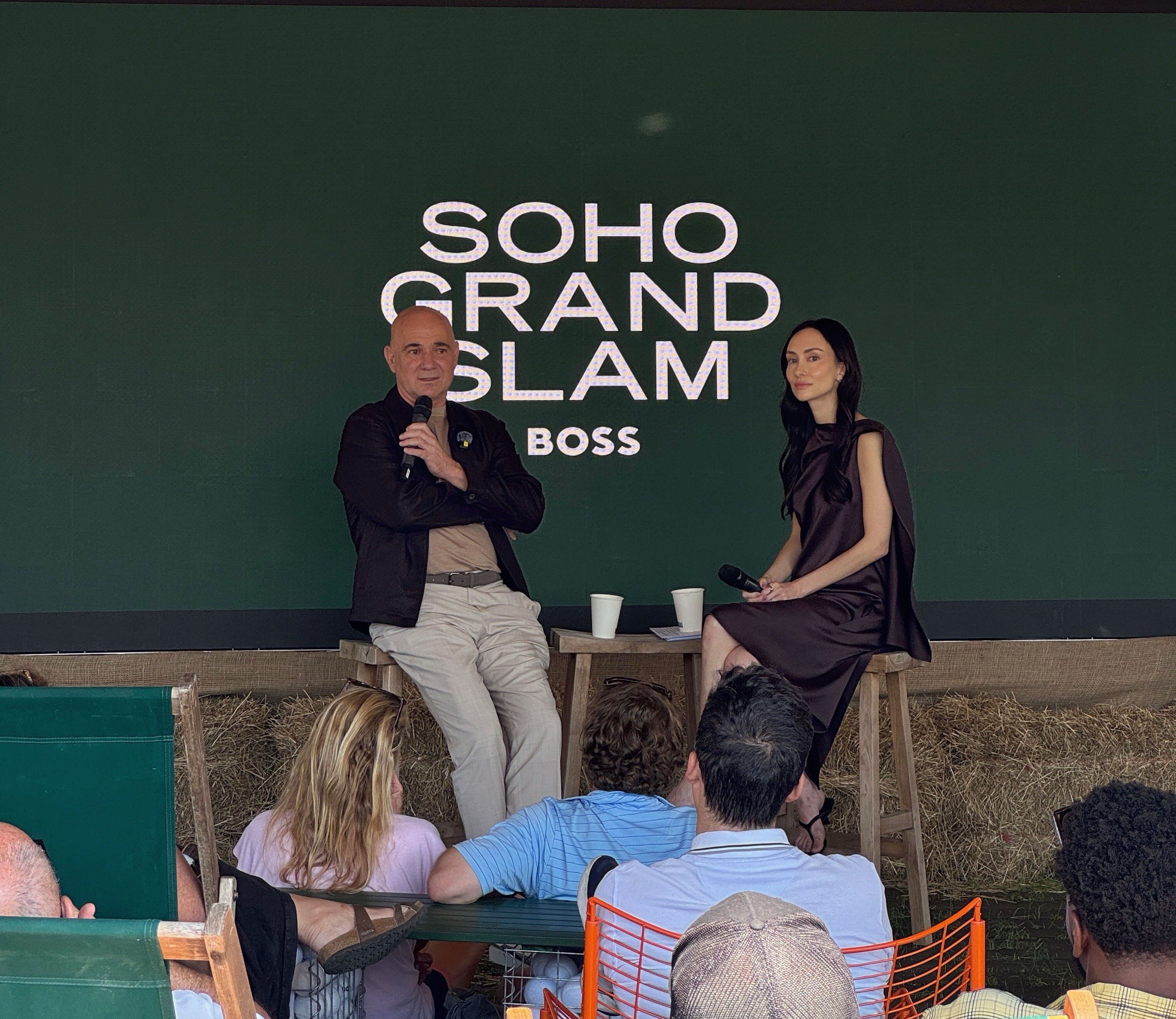
Finally my husband arrived and some of the homesickness dissipated as we geared up for the whole reason I’d stayed in London so long: a conversation with Andre Agassi at an event hosted by Boss and Soho Farmhouse. I’d spent days preparing, but in reality I didn’t need to. When I met him in the cafe beforehand, it all felt strangely... normal. We chatted before walking out on stage, and once we sat down the conversation flowed so easily that someone afterwards asked whether we’d met before.
There was teasing and laughter, but mostly wisdom. As we talked, I kept catching myself thinking about how absurd it all was—that barely a year into covering tennis, I was interviewing one of the sport’s biggest icons and it felt completely right.
For much of the trip I’d felt like I was constantly trying to earn permission to be there—whether from Wimbledon, from people who’d been covering the sport for decades, or sometimes even from myself. Then I sat down across from Andre Agassi and felt it instantly.
Reflecting on it now, Wimbledon wasn’t really the point of those three weeks. It was everything surrounding it: the people who happily opened doors, the strangers who made me feel seen, the friends who carried me through the hard days, and the reminders—sometimes from the most unexpected places—that I’d built something people genuinely cared about.
I arrived in London hoping Wimbledon would feel like some sort of dream. Instead, it mostly felt like another test. Of my body. My confidence. My journalism. My ability to keep showing up when everything—from chronic pain to institutional stuffiness—made me wonder if it was worth it.
During my three weeks away, I cycled through denial, anger, bargaining, and plenty of moments that felt like depression. But by the end of it, I arrived squarely at acceptance—not of Wimbledon as it is, but of myself inside it.
Thanks for reading! If you have tennis news or tips to share, email jessica@hard-court.com. For regular updates, follow Hard Court on Instagram.
Thoroughly enjoyed your review. Your post on the Serena-Wilson racquet question was indeed benign, and any kerfuffle reflects more on Wilson than you. Racquet nerds like me were indeed curious, and your post cast no aspersions. The good news is that if Wilson took umbrage, they recognize your journalistic reach (and bona fides). Silver (or graphite) lining.
I can relate to this experience so much! I wrote a NY Times op ed about loving the Yankees and got a book deal out of it....which sent me flying to every game in every city that season. I tried and kept failing to be taken seriously by the Yankees PR guy, so I could interview the players. It was so maddening and frustrating, but eventually I found a way in. Victory.