


Several people texted me this week about the latest ranking of the world’s most marketable athletes from SportsPro, a media and events company covering the sports business, which placed Aryna Sabalenka first and Coco Gauff 32nd. One agent wrote, “Make it make sense,” a reaction that captured how far these supposedly authoritative rankings can stray from the business they claim to measure.
Being named the world’s most marketable athlete puts you in some fairly exclusive company—recent editions have given the top spot to Lewis Hamilton, Simone Biles, and Lionel Messi. But who gets to join them depends on a fairly subjective set of choices about what makes an athlete marketable.
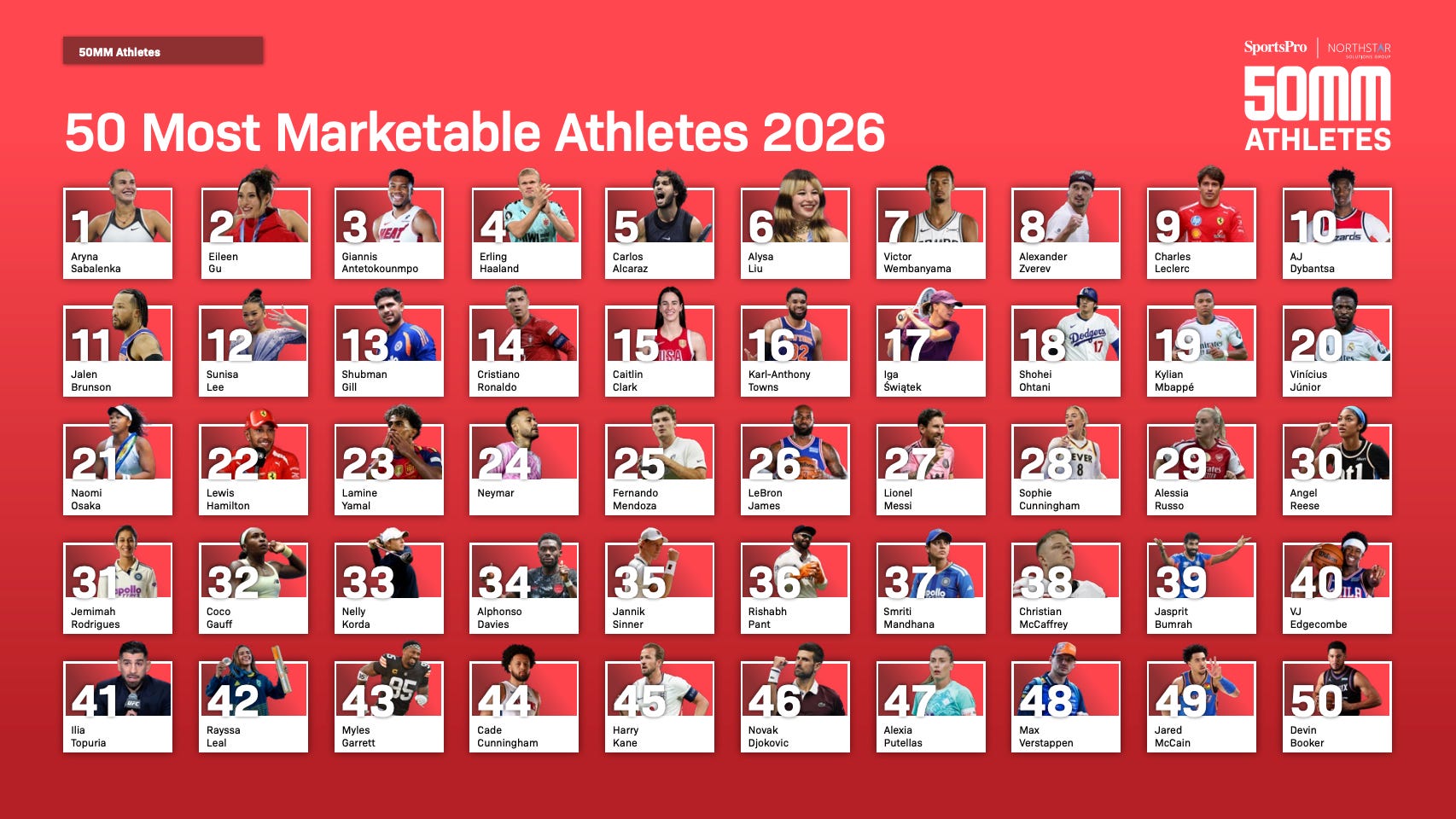
Sabalenka has plenty going for her commercially, and her growing presence across fashion and consumer brands is definitely notable. But placing Gauff 31 spots below her is difficult to square with the business the 22-year-old has built, including an expansive New Balance relationship, her partnership with Miu Miu, and a multiyear Naked Smoothie deal that has grown to include her own product, to name a few.
When I looked through the methodology to try to make sense of it, the most revealing detail was that Gauff actually scores slightly higher than Sabalenka on “Brand Equity,” the category meant to capture how strong and established an athlete’s brand already is. Almost 91 percent of the gap between their overall scores comes from another category, “Momentum,” which rewards how quickly their audience and commercial activity are growing, including through new partnerships.

So what looks like a verdict on their relative appeal to brands is largely a judgment about how quickly their sponsorship businesses are growing. It’s a narrower finding than the 31-place gap suggests, especially to anyone encountering the ranking without reading the fine print.
SportsPro produces the ranking with NorthStar Solutions Group, a business consulting firm that helps assess sponsorship opportunities. Together, they consider how strong an athlete’s brand is, how quickly it’s growing, and how much potential remains. Growth and future potential account for more than half the score in their model, giving athletes whose businesses are expanding an advantage over those with strong, established partnerships.

Signing new sponsors is the most obvious way to earn that advantage. But the emphasis on new deal activity introduces a problem that anyone who works with athletes will recognize: the number of partnerships someone signs isn’t a great indicator of how many brands actually want to work with them.
Keep reading for a breakdown on what a ranking like this reveals and overlooks about an athlete’s commercial appeal.
