


You’re reading The Insider, a series spotlighting the people whose work behind the scenes shapes professional tennis.
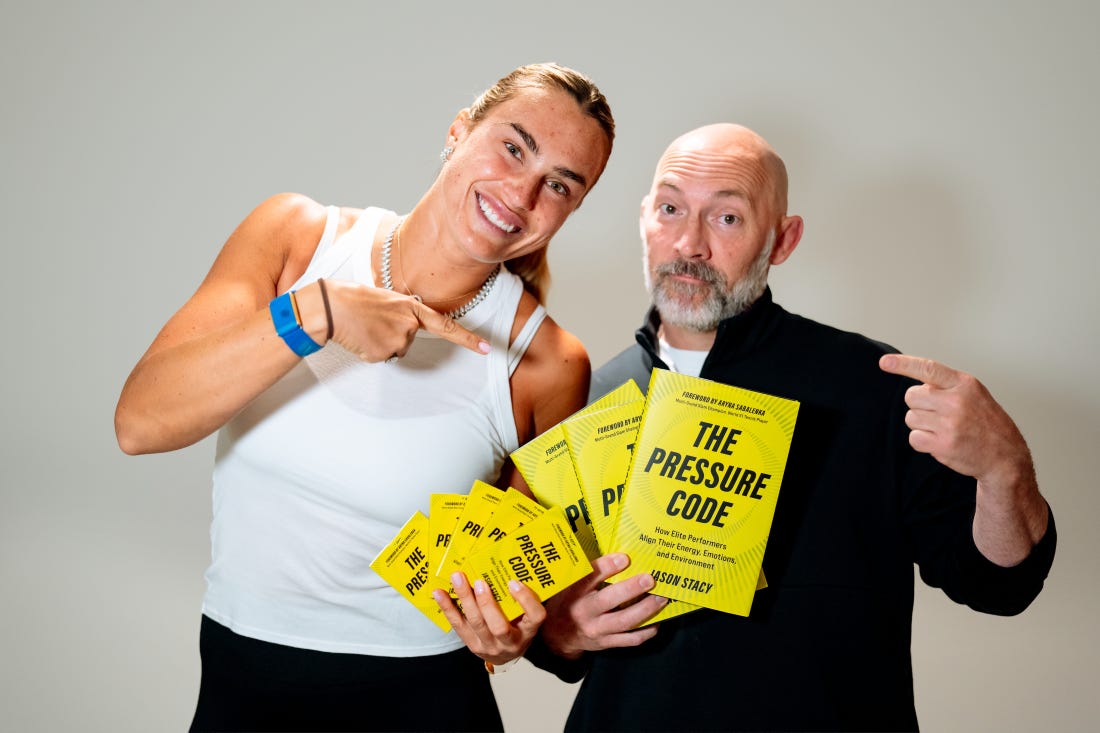
Jason Stacy has spent nearly two decades working in professional tennis, which is somewhat remarkable considering he never really intended to work in tennis at all.
Stacy, Aryna Sabalenka’s longtime mental and physical performance coach, found his way onto tour in the mid-2000s almost by accident. He had been working as a performance coach, sports therapist and strength coach across disciplines including combat sports, swimming, gymnastics and professional dance when a mutual friend connected him with former top-20 Russian player Dmitry Tursunov, who was looking for someone to join his team. A training block with Tursunov and fellow Russian pro Igor Kunitsyn turned into a few tournaments, a few tournaments turned into other players asking for his help, and, as Stacy puts it, “I just got stuck here.”
He arrived at a very different moment in tennis. Tournament gyms could amount to “some stuff in the corner,” he joked to me, and Stacy was borrowing exercises from martial arts and other disciplines that occasionally earned him strange looks. He remembers former world No. 1 and two-time Grand Slam champion Marat Safin once making fun of a homemade suspension trainer he’d rigged up with carabiners and PVC pipe, only to see similar equipment become commonplace on tour a few years later. Even now, he and Sabalenka joke about doing something completely ridiculous at practice just to see how quickly someone else starts doing it.
That tendency to look at things differently has become central to Stacy’s role with Sabalenka. Sometimes he’ll deliberately walk away from one of her practices and come back later because he worries that staring at the same thing for too long can make it harder for him to see what’s actually happening. During matches, he’s watching not only how Sabalenka moves and hits the ball, but how quickly she walks to the baseline, where her eyes go between points, and even where in her body she seems to be breathing.

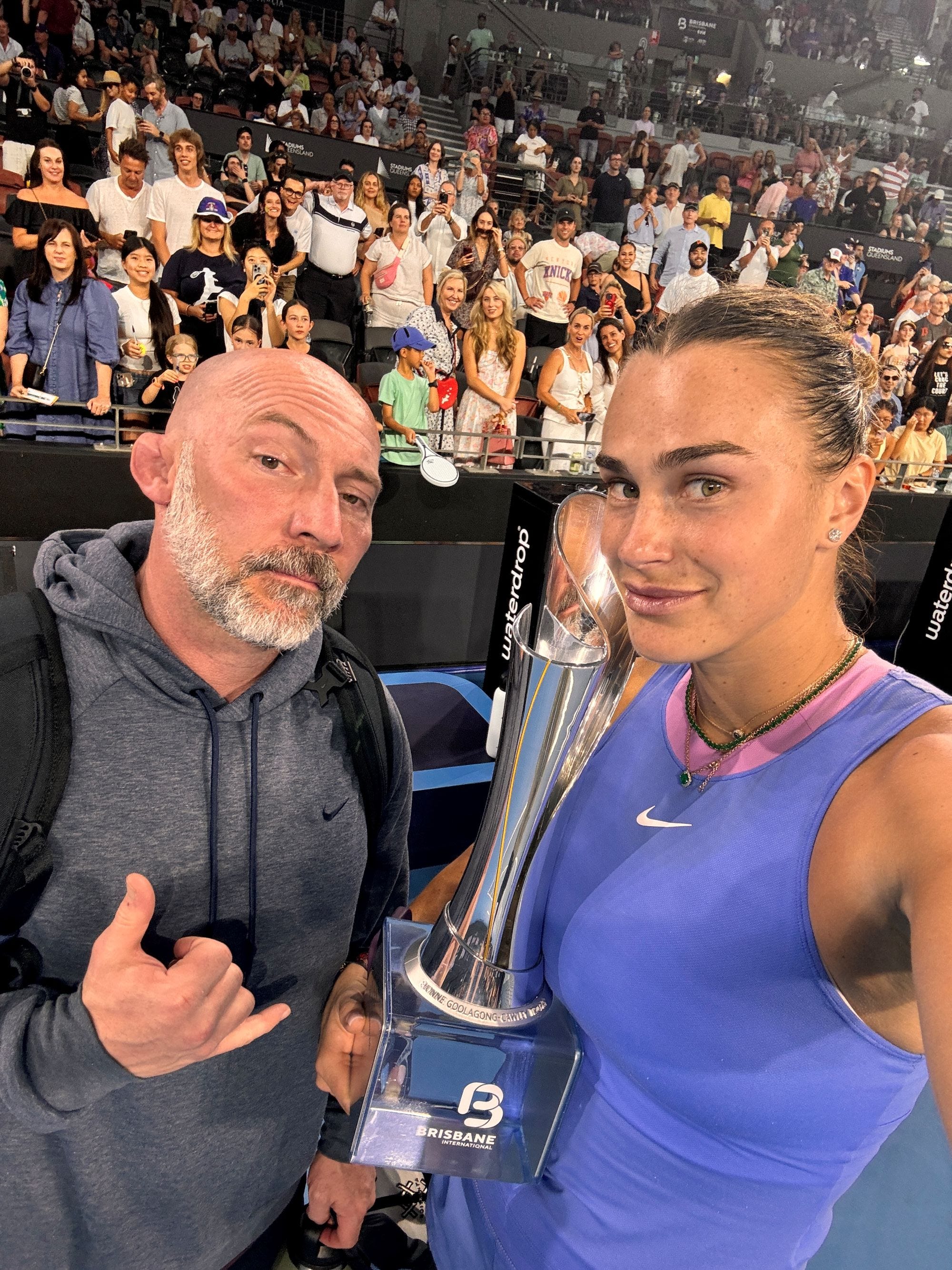
Stacy has now been with Sabalenka long enough to have seen just about every version of her: the young player who was, in his words, “all fire;” the one struggling to understand why her best tennis disappeared at the Grand Slams; the one whose serve famously deserted her; and, eventually, the player who spent 99 consecutive weeks at world No. 1 and became one of the most consistent forces in the sport. His new book, The Pressure Code, draws heavily on what he learned along the way.
I spoke to Stacy about his unlikely path into tennis, what he saw in Sabalenka when they first began working together, why he pushed for her longtime hitting partner Anton Dubrov to become her coach, the three-hour breakfast he considers a turning point in her career, and all the tiny things he watches from the player box that the rest of us probably miss.
This interview has been edited and condensed for clarity.
You didn’t come up through tennis in the traditional way. How did you actually find your way onto the professional tour?
Yeah, I wasn’t a tennis player. I’ve been on tour since around 2006 or 2007, so about 20 years now. I’ve worked with a lot of players, men and women, and with Russian and Kazakhstan Fed Cup and Davis Cup teams.
But it really started because I had a friend who had a friend who happened to be a tennis coach, and one of his athletes was Dmitry Tursunov. This was when Dmitry was a kid and had just moved from Russia to the U.S. We were living in California, so I met him then, but that was about it.
Many years later, I was living in Australia and already working as a performance coach, sports therapist, and strength coach in other sports. That mutual friend came to Melbourne for the Australian Open, and Dmitry and his coach happened to be looking for someone new to work with him physically. They basically said, “Have you ever worked with tennis players? Would you be interested?”
I was moving back to the U.S. anyway and didn’t really have a plan, so I agreed to go to California and do a training camp with Dmitry and Igor Kunitsyn. It went really well. Then they said, “Traveling at tournaments is very different from doing a training block. Do you want to try some tournaments?” I said, “Yeah, let’s go.”
And then I just got stuck here. [Laughs.] People kept asking me for help. Davis Cup captains, different countries, players on the men’s and women’s sides. It just grew from there.
And it sounds like you were bringing a pretty different approach to tennis at the time.
Yeah. Because I didn’t have the same background, I looked at things differently. A lot of what I was doing came from martial arts, movement drills, and mobility work.
It’s funny, because a few months ago Marat Safin was in the gym and asked me to help him set up a TRX. Many, many years ago, I think at the Kremlin Cup, I had basically made my own suspension trainer with carabiners and PVC-pipe handles and hung it over a door. This was before TRX was everywhere. Marat was making fun of me: “What is this thing? What are you going to do with this rope on the door?” A few years later, they were all over the tour.
There were a lot of things we’d do where the guys would say, “Let’s go train somewhere else,” because they didn’t want everyone watching. Then a couple of weeks later you’d see other people doing the same thing.
Even with Aryna now, we have this ongoing joke that we should just do something crazy because everyone’s watching and see if people start doing it. [Laughs.]
Keep reading for more on what Stacy saw in a young Sabalenka, the inner workings of her team, the conversation he considers a turning point in her career, and what he sees from the player box that we don’t.
