


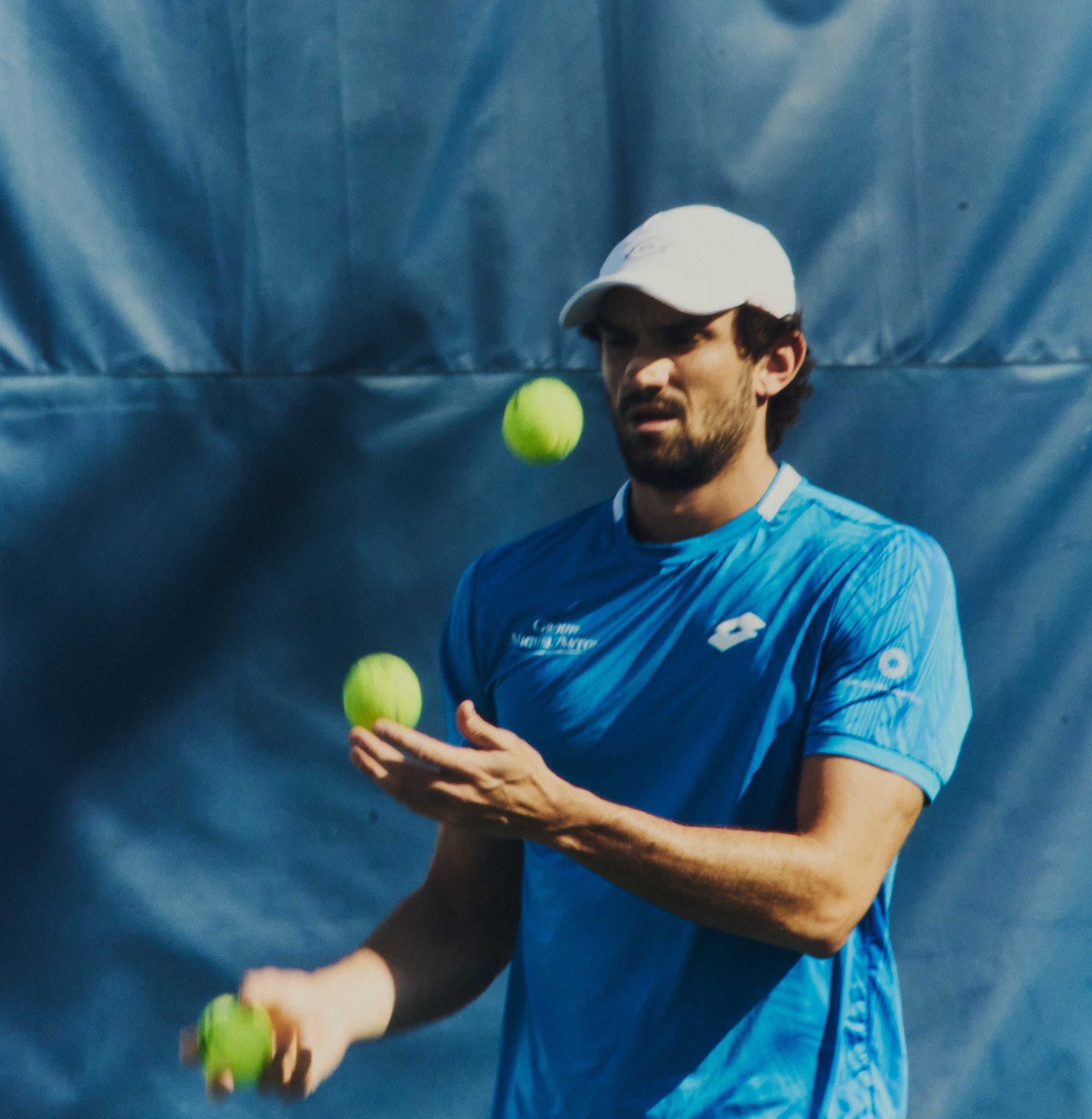
When Valentin Vacherot’s ranking shot from world No. 204 to No. 40 last fall, the shock wasn’t just that a player who had spent most of his career on the Challenger circuit suddenly won a Masters 1000—it was how improbable the path there felt, from beating Novak Djokovic to then facing his cousin Arthur Rinderknech in a final that instantly lodged itself in tennis lore. For a couple of weeks, the story took on that rare, almost cinematic quality the sport occasionally produces.
A few months later, when I caught up with him in Delray Beach, the atmosphere around him was quieter, though he was still stopped often for fan photos. He’d just lost a first-round match to Alex Michelsen and, despite his frustration on court, described it without drama or defensiveness.
“It wasn’t a bad match, it wasn’t a great match,” he said. “We were both serving well but he played better than me in the first set tiebreak and returned well in one of my service games, I didn’t. The difference was a few points.”
That framing—tennis as accumulation of small differences rather than narrative swings—has shaped much of how he’s processed everything since Shanghai, which from the outside looked life-altering and in some respects was, but in his telling translated mostly into a brief period of heightened attention back home in Monaco. During the offseason he found himself doing local media, visiting schools, fitting interviews and appearances around training in a way that hadn’t existed before, but for the most part his daily routine went unchanged.
Keep reading for Vacherot on the months since Shanghai and the task of backing it up.
