How the walk-on became tennis' most valuable marketing moment
Why brands are turning the short walk to the court into a runway and helping the sport in the process.
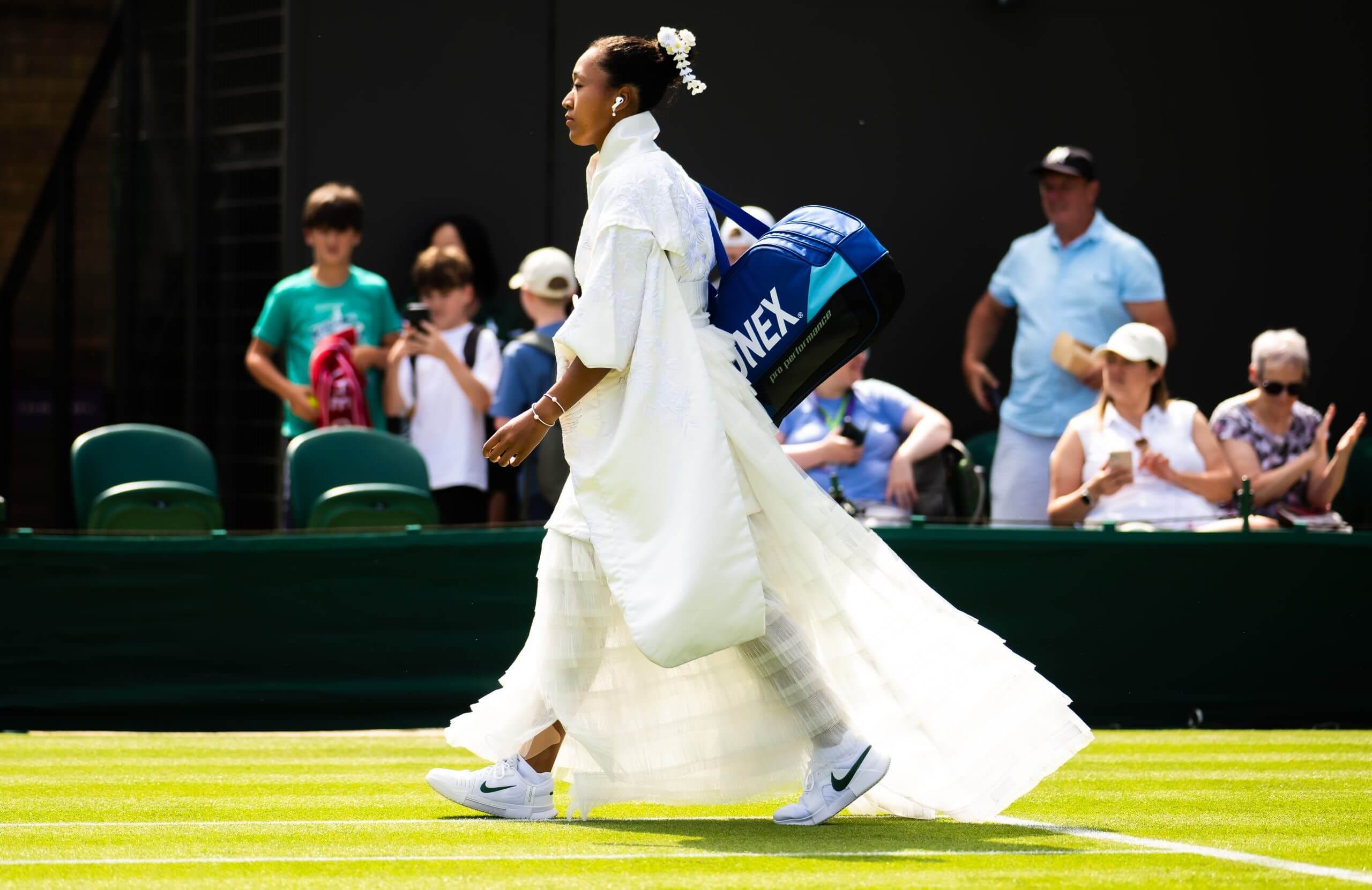
It wasn’t long ago that Naomi Osaka’s elaborate walk-on looks felt like an outlier. This Wimbledon, they feel like the blueprint.
Across the grounds, more brands than ever are treating the walk from the locker room to the court as its own marketing moment—complete with bespoke tailoring, custom jackets, and carefully choreographed reveals. While no one is going quite as far as Osaka and her team—they’re bringing couture to the court, after all—the message has clearly landed. Brands, agencies, and players have watched the attention those entrances command and thought: we want in, too.
There is precedent, of course. Roger Federer famously wore a white suit onto Centre Court in 2007, among other outfits. Suzanne Lenglen challenged the restrictive dress codes of her era in custom Jean Patou designs that transformed what a tennis player could look like. But Osaka has done more than anyone to demonstrate just how powerful the walk-on can be in today’s media ecosystem, turning it from a novelty into a repeatable marketing event.
The earned media value—the unpaid exposure generated through press coverage, social sharing, and online conversation—is hard to ignore. Every Osaka entrance spawns hundreds of articles, Instagram posts, TikToks, and reaction videos. Her Wimbledon walk-on this year produced the most-watched video in Tennis Channel’s Instagram history. While not everyone in tennis media is convinced behind the scenes, plenty are happy to ride the engagement wave these fashion moments create. Follow the money, honey—or at least the metrics that help these companies get closer to making some.
Part of the appeal is that walk-ons are tailor-made for the modern internet. They’re cinematic, emotionally charged, easy to consume in under a minute, and designed to travel across TikTok, Instagram, and YouTube Shorts. A five-hour tennis match is a commitment, they say. A 20-second entrance clip is an invitation.
Tennis spends a lot of time asking how to attract younger audiences, usually defaulting to ideas like shorter formats or more highlights. Fashion offers another path entirely. It gives people who might never choose to watch a long match a reason to pay attention—and once they’re watching, some inevitably stay for the tennis.
Osaka walks out and millions of people who aren’t tennis obsessives suddenly become curious about what she’ll wear next. Those moments pierce through to the broader culture, giving tennis something it desperately needs: relevance beyond its own bubble. Some people come for the fashion and end up falling for the personalities wearing it, then for the sport itself. The products become desirable in their own right—Osaka’s Nike Wimbledon kit sold out before she’d even played a match. It’s a virtuous cycle that ultimately expands tennis’ audience rather than detracting from the sport.
Of course, Osaka is uniquely magnetic, inspiring both passionate fans and equally passionate haters in a way few athletes can. But Wimbledon has shown that the effect isn’t limited to one player.
Taylor Fritz generated far more conversation than a routine first-round win normally would have after walking onto court in a custom white Boss suit. Frances Tiafoe’s theatrical removal of his Lululemon tracksuit pants spread well beyond tennis circles, popping up in group chats full of people who hadn’t watched a point all tournament. Coco Gauff’s rumored second collaboration with Miu Miu had fashion fans eagerly awaiting another drop of luxury sportswear before she’d even begun her campaign. And Novak Djokovic’s custom Lacoste blazer sparked conversation (and debate about the fit) that reached far beyond the usual post-match analysis.
For brands, that attention is especially valuable because it’s one of the few places in tennis where genuine creative freedom still exists. Match kits are constrained by tournament dress codes, technical performance requirements, and the realities of elite competition. The walk-on isn’t. It’s an opportunity to tell a story, build anticipation, and create an emotional connection before the first ball is struck.
That’s why these moments are no longer isolated expressions of style—they’ve become a deliberate marketing strategy. Brands aren’t just dressing athletes anymore; they’re producing miniature runway shows with the understanding that, for millions of people, the entrance may be the most memorable part of the day.
The walk from the tunnel to the baseline lasts less than a minute, but it’s becoming one of the most valuable pieces of real estate in tennis. For brands, it’s a chance to tell a story. For players, it’s an opportunity to express personality. And for the sport, it’s a reminder that attracting new audiences doesn’t always mean reinventing the sport—it can be as simple as rethinking how you present it.
Thanks for reading! If you have tennis news or tips to share, email jessica@hard-court.com. For regular updates, follow Hard Court on Instagram.
Hard Court is built on independent reporting and analysis. If you refer to our content in your work, please cite the source. I really appreciate it!


