How Richsport turned tennis gear into self-expression and landed a collab with Head
The female-founded racquet accessories brand brings color, culture, and LA energy to a tennis institution.
There’s a certain kind of tennis player Richsport resonates with—not the traditionalist or the gear purist, but the one who’s always felt the sport could be more expressive than its equipment has historically allowed. Since launching in 2024, the accessories brand has built a following around the idea that racquets don’t have to sit inside tennis’s usual visual restraint. They can carry color, personality, and even cultural cues without losing performance credibility.
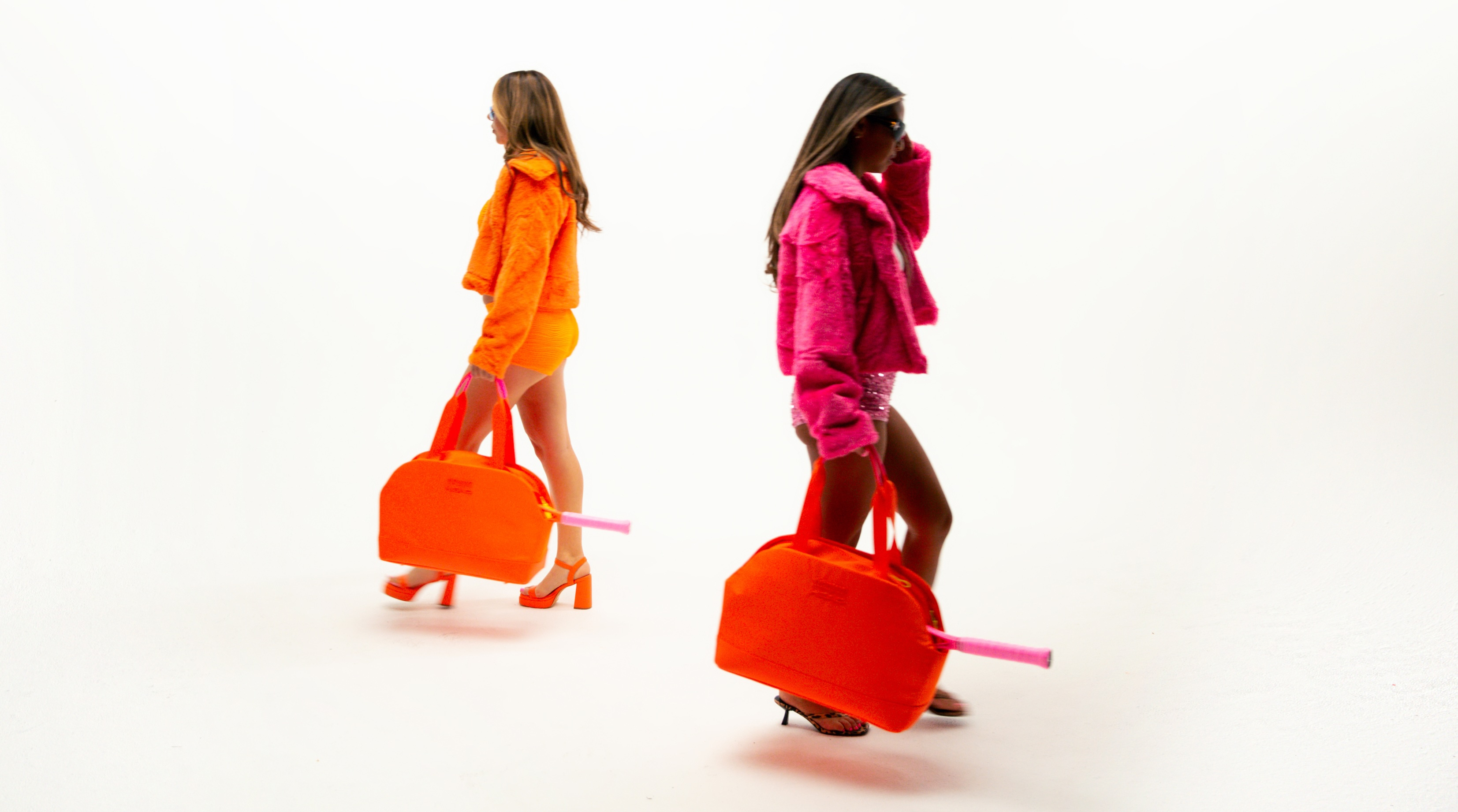
That perspective now extends into Richsport’s first collaboration with the racquet giant Head, a limited-edition drop that includes Head’s Tour tennis bag done up in Richsport’s signature orange with pink and yellow details, its Lynx Tour strings in bright orange, and a coordinating pink and orange dampener.
For co-founders Sarah Koudouzian and Nicole Dunn, the collaboration had been on their internal vision board from the beginning. “We always positioned ourselves as racquet accessories so that all the major racquet brands who’ve been around forever would want to collaborate with us,” said Koudouzian. When they approached a Head executive at the charity tennis event Desert Smash, they had a pitch ready. What they didn’t expect was recognition right off the bat: he pulled a Richsport dampener out of his pocket, something he’d picked up in a gifting suite while trying to figure out who made it. They showed him videos featuring their products on the Head Radical racquet and quickly secured a meeting that led to the collaboration. “It felt like a no-brainer,” said Dunn.
That sense of inevitability runs through the brand itself. The idea for Richsport emerged during the pandemic tennis boom, but its emotional origins go back much earlier, to two childhood best friends at a public middle school in Altadena bonding over what they describe as the “nerdy” sport they loved anyway. Neither grew up inside tennis’s country-club pipeline, and both remember how narrowly the sport defined belonging. “Growing up, we didn’t see anything where we could express our personalities or backgrounds on court,” Dunn said. “There was no color, no options.” Their paths diverged—Koudouzian a competitive junior and lifelong athlete, Dunn a recreational player and designer—but Richsport became a way to merge those perspectives into something broader. “Just because I don’t live and breathe tennis doesn’t mean I’m not part of it,” said Dunn. “We wanted to show that that was possible too.”
Even the name carries that reframing instinct. During an initial brainstorm one day, Koudouzian tossed out Richsport—a way to upend tennis’s long-held associations with wealth and status. “To us, rich is a feeling,” she said. “People who understand the sport get it immediately. And for those who don’t, it becomes a talking point.” That insider-outsider duality still shapes the brand’s community. The feedback they hear most often isn’t from lifelong players but from people newly entering the sport. “The thing we love most,” Koudouzian said, “is hearing that someone who never thought they belonged on a tennis court now feels like they do.”
What makes the collaboration with Head notable is where it sits in the sport’s brand ecosystem. The past decade has seen a steady influx of fashion and activewear labels entering tennis apparel, but the equipment tier has remained largely controlled by legacy manufacturers with little outside co-creation. By partnering with a young, female-founded accessories startup rather than a traditional athlete or apparel brand, Head is effectively testing whether identity-driven customization can sit alongside performance credibility, and whether a new generation of players expects their gear to signal personality as much as spec.
Richsport’s products—from candy-like dampeners to shirts that read “Busy watching women’s tennis”—are designed to make a statement. The founders draw from their respective Asian and Middle Eastern heritage, where bold color and ornamentation carry cultural resonance, and their tiger mascot, Richie, references their shared Chinese zodiac sign as much as on-court ferocity. That positioning extends into the campaign for the collaboration, which was shot in Los Angeles and features velour tracksuits, gold jewelry, animal prints, and a low rider car—visual cues pulled from the founders’ own environments rather than tennis’s usual stuffy club settings. “We wanted to bring our people into this,” Koudouzian said. “LA culture means diversity, and tennis hasn’t always reflected that.”
Despite the polish of the Head partnership, Richsport still operates in startup mode. Both founders juggle other work while managing production, drops, and growing visibility, and they’ve held off on outside investment offers to stay hands-on. “Our mental capacity is low right now,” Dunn laughed. “We can’t handle investors yet.” Koudouzian frames that stubborn independence as an extension of their athletic backgrounds. “You have to be a certain type of delusional to do something like this,” she said. “Athletes have that audacity. You learn to take up space early.”
As the launch approached, she described a familiar sensation: the pre-match nerves she remembers from tournament play. “It’s excitement, but also, oh my god, it’s really happening,” she said. For a brand built on expanding who tennis feels like it belongs to, collaborating with a legacy racquet company carries symbolic weight. “They’ve never done something like this with a racquet accessories brand,” she said. “Let alone a female-founded startup.”
Thanks for reading! If you have tennis news or tips to share, email jessica@hard-court.com. For regular updates, follow Hard Court on Instagram.


