


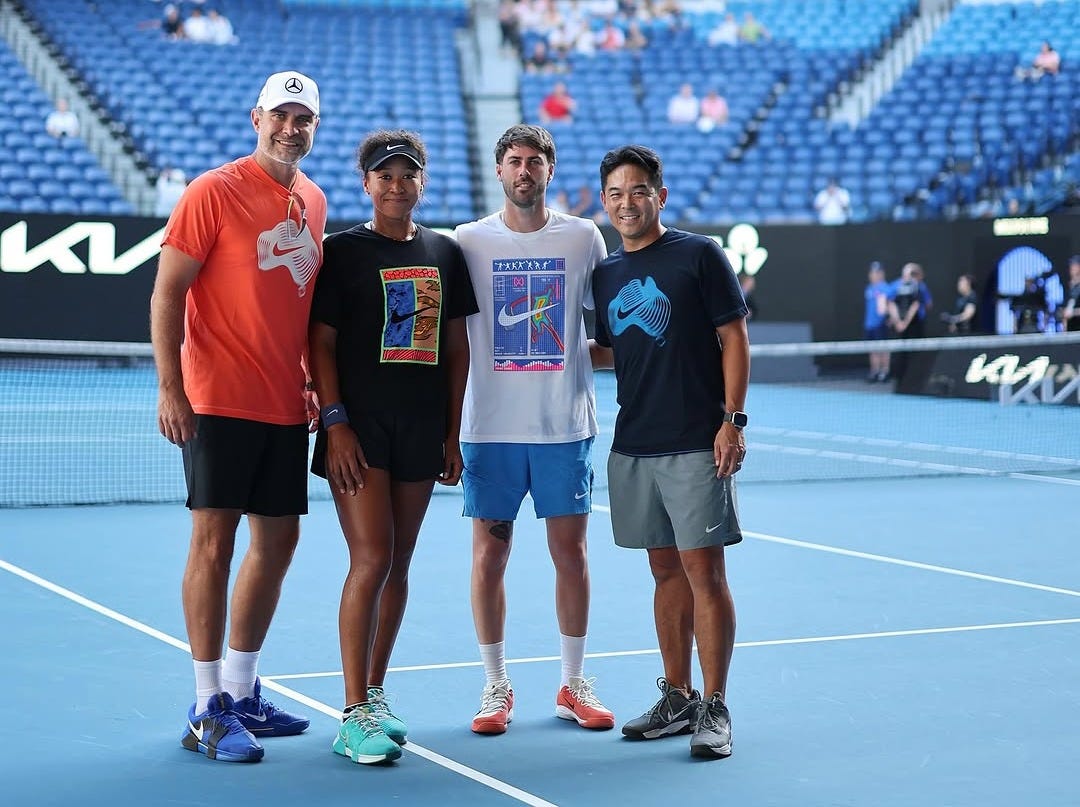
Last fall, Robbie Ohashi thought he had graduated from life on the tennis tour when his partnership with Kei Nishikori, who he worked with as a fitness trainer for 13 years, came to a close. He enjoyed it, he told Hard Court, but—as any tennis fan who has lost sleep simply trying to follow the calendar from afar can imagine—it was also grueling.
But as he settled into life at home with his family in Chicago, running his physical therapy business Performance In Motion, he got a call that he—and his two teenage daughters—knew he couldn’t pass up. Naomi Osaka was looking for a physical therapist. “I thought I was done,” he laughed. “But I really believe in who Naomi is and what she represents. So I was like, I’ll give it a shot.” Six months into the job, he’s very glad he did.
I spoke to Ohashi the week before Roland Garros about how he went from working with hammer throwers to tennis players, what’s surprised him most about getting to know Osaka, how they managed that infamous trip to the Met Gala while prepping for Rome, and why he believes it’s time to reframe the idea of a post-childbirth “comeback.”
Take me back to the start of your career. How did you get into physical therapy, and how did that eventually lead you to tennis?
Like a lot of physical therapists, I enjoyed playing sports and loved competition. During my time at UCLA, I knew I wanted to combine science and medicine with relationship building and the art of caring for people. I shadowed some physical therapists and realized they got to build real relationships with people and help them reach their goals, rather than just flying into a room and leaving without even learning their name. That struck a chord with me. After a few years teaching English in Japan, I chose a graduate program at Washington University in St. Louis that focused on movement quality in physical therapy.
Eventually I moved to Chicago, where I worked with a lot of NBA and hockey players. Around that time, I started traveling with a Japanese hammer thrower named Koji Murofushi who was a huge star in Japan. Together, we won a world championship and an Olympic bronze medal. It just so happened that his agent represented a lot of well-known athletes in Japan, and he introduced me to this young 21-year-old named Kei Nishikori.
I didn’t know anything about tennis. I didn’t play tennis. But I said I’d give him an evaluation. We hit it off, and when the hammer thrower retired in 2012, I started helping Kei out pretty heavily. We ended up working together for 13 years, and I really got to fall in love with the sport.
Movement was always my focus with Kei—I wanted him to be the best mover he could be. I believe that when athletes move well, everything improves: durability, performance, confidence, and ultimately their ceiling. They even carry themselves differently outside of their sport.
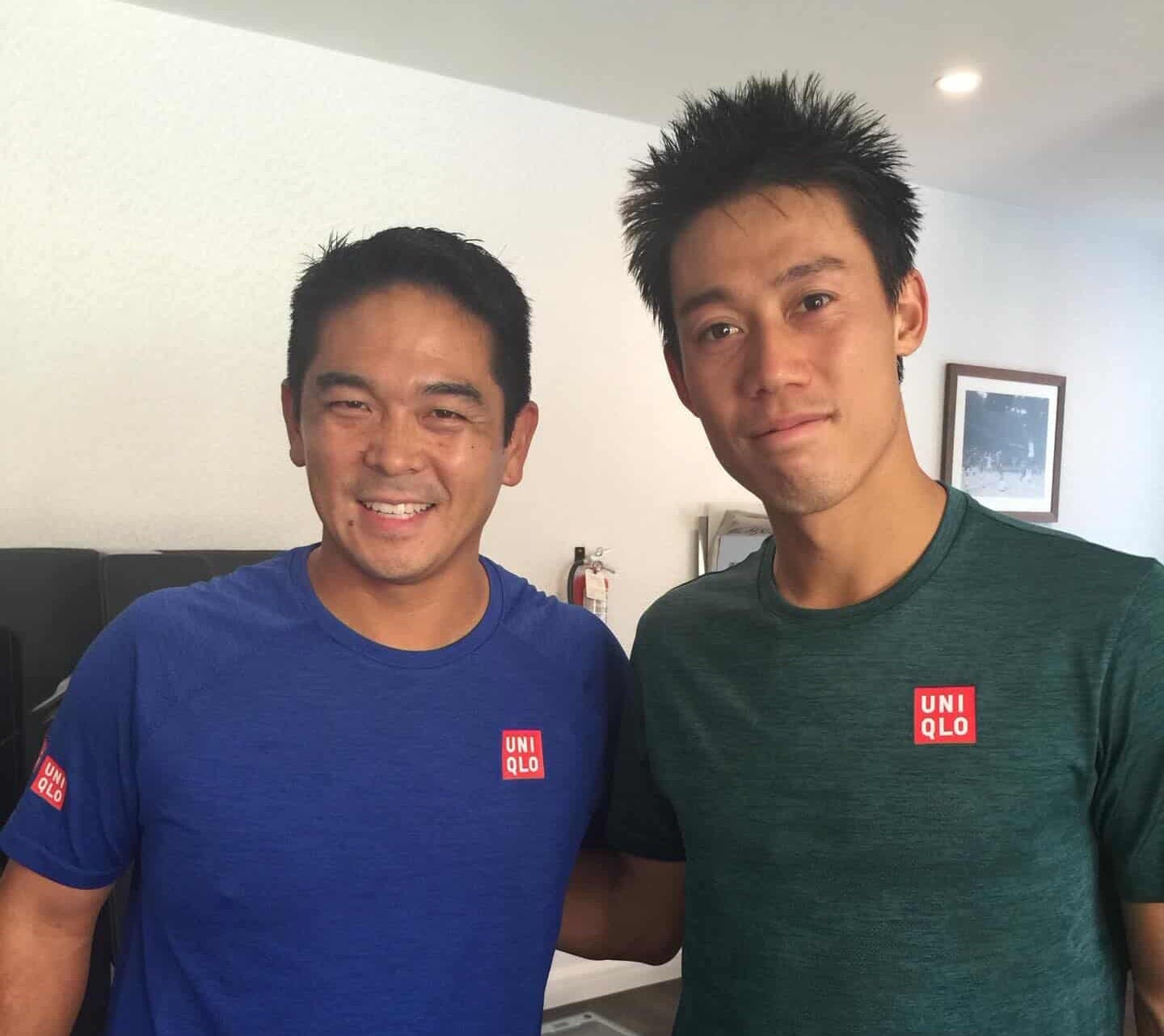
I finished with Kei in 2025 and am incredibly proud of what we accomplished together. I’m grateful to call him a friend. We still text often, and since he’s retiring this year, I’m hoping to be there at the end so we can hug it out.
Wow, so you had a long run on tour under your belt. How did the partnership with Naomi come about?
In November of last year, I got a call from Tomasz Wiktorowski, Naomi’s coach. He got my name from Thomas Johansson, who I had met through Kei—it’s amazing how God works. He said they were looking for someone and, at that point, I was thinking, I had a good run with Kei, and it was a lot, you know? [laughs]
So I prayed about it and had a lot of conversations with my very supportive wife and kids. The kids were like, “You’ve got to do this. It’s a great opportunity.”
I’ve always believed in who Naomi is and what she represents, so I thought, I’ll give it a shot. And it’s been fun. It’s only been six months, but I hit it off with her and her team right away, and I feel really good about what we’re building together.
Definitely not an opportunity that’s easy to pass up. Before we dive deeper into that, could you just explain how physical therapy that’s focused on movement is different from traditional physical therapy?
Good question, because I think it’s a term you hear all the time. At my company, we really hang our hat on the idea that there are foundational movements every athlete needs to be able to accomplish, whether they’re a basketball player, a tennis player, or a track-and-field athlete. We want those movements to be smooth and efficient first. Then, almost like building a house, you start layering on movements that are specific to their sport.
If a high school athlete comes in with their parent, the parent might say, “My kid needs to perfect their soccer movements.” But we believe there are core movement patterns everyone needs to master before that. Even something as simple as sitting down in a chair and standing back up is essentially a squat. When a tennis player split-steps and moves to return a serve, they’re relying on many of those same foundational movement patterns. Once those are established, you can build sport-specific movement, and then take it a step further by focusing on how to move on a particular surface, whether that’s hard court, grass, or clay.
That’s why going from Miami to Madrid with Naomi was so exciting for me. When I joined her team, I told her, “I can’t wait to get you moving on clay.” She’s already such a great athlete, but I felt there was another level she could reach on that surface—there’s always an opportunity to keep refining. But if you try to focus on the advanced movements before establishing the fundamentals, it becomes much more challenging.
So tell me about meeting Naomi for the first time, and what that was like? Because obviously, these relationships are so intimate—I almost envision it like two actors doing a chemistry read.
You’re very right. It almost feels like a blind date, where in the first five minutes you’ll know if it’s a fit or not. [laughs]
Especially for me, I’m a feel person. There’s so much technology in my profession right now—force plates, measuring tools, heart-rate monitors and all these things—but if we don’t pay attention to how people respond to us, you can miss something important. So I wanted to keep an open mind and get rid of any preconceived notions about what Naomi was like. I had met her before through Kei and the team in Japan, but only in passing.
We were actually laughing about our first meeting the other day. I met Tomasz in Coral Gables and Naomi met us at this random Marriott where I was staying. We did our first trial session in this seedy basement gym with no windows. It was really just about getting to know each other and doing some basic workout movements.
Geez, I was nervous and she was so relaxed. We laugh about it now because I actually twisted my ankle during the session. I had these brand-new shoes on and was thinking, everything needs to be perfect. [laughs]
But at the end of the day, it really comes down to a feeling. Tomasz and I saw eye to eye right away, and my first week with Naomi was very positive. There was openness on all sides—Naomi, Tomasz, Mati [Zukas], her hitting partner. They made it easy on me as the newbie and really welcomed me in.
Become a paid subscriber to read what surprised Robbie Ohashi most about Naomi Osaka, how they managed that whirlwind Met Gala trip, and why he believes it’s time to retire the word “comeback.”
