

Inside Courting, the upstart label targeting tennis’ next-gen consumer
Founded by media exec Courtney Kelly, the new tennis brand is collaborating with Whitney Port on capsule collections aimed at a younger, style-conscious player.

Launching a tennis apparel brand in 2026 means navigating a market that is simultaneously booming and oversaturated. Participation is rising, style discourse is louder than ever, and consumers have more choice than at any point in the sport’s modern era.
Courting, founded by longtime media partnerships executive Courtney Kelly, enters that crowded landscape with ambitions to balance performance credibility and lifestyle appeal while building early affinity with tennis’ next generation of consumers. The fashion influencer and reality television OG Whitney Port is collaborating with the brand on capsule collections, bringing design experience and a fashion-forward perspective aimed at the sport’s expanding cultural audience.
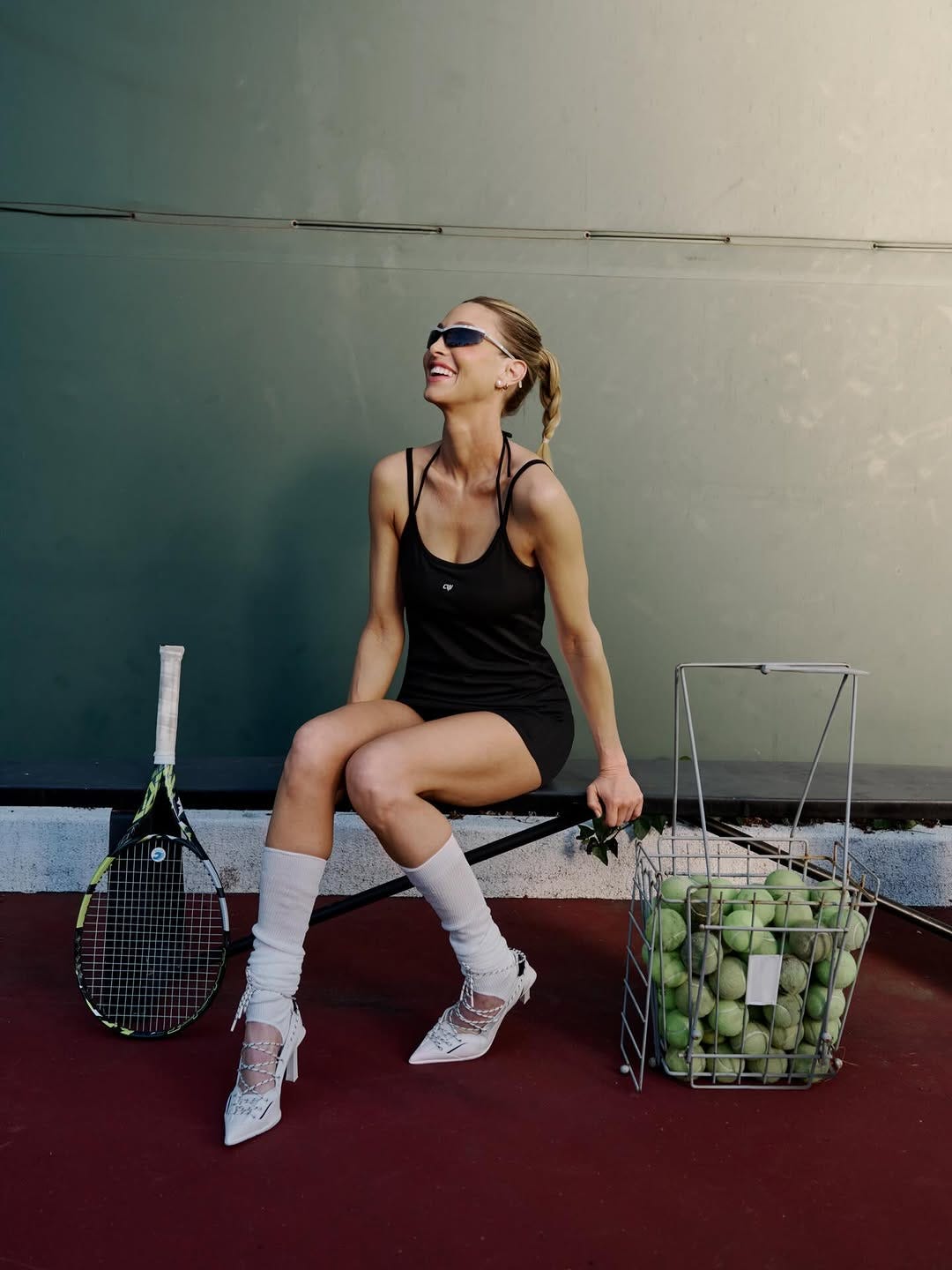
That partnership began taking shape a little over a year ago, after the two reconnected through a shared tennis coach. Port was newly immersed in the sport, describing the experience of learning it later in life as both humbling and unexpectedly confidence-building. Kelly, meanwhile, had played since childhood and had been thinking for years about what she might eventually build inside the category.
“To Whitney’s credit, this was very early stages,” Kelly told me. “I was taking a huge bet. I didn’t even know strategically what this would evolve into yet. But she was immediately like, ‘I’m in. I believe in you. I believe in tennis.’”

Port, who has founded or co-designed four fashion lines in her career, including the eponymous Whitney Eve, said returning to the design process felt instinctive, particularly when it came to fit and technical construction.
“With activewear, technical language really matters,” she said. “Knowing how something should sit on the body and how important those fittings are, that was where my experience really came into play.”
The collaboration was also an opportunity for her to rethink tennis’ stylistic conventions.
“I wanted to bring the fashion crowd into the mix,” Port said. “Tennis apparel has looked the same for a long time—variations of the same shapes in different colors. I was interested in adding a bit of edge and thinking about how those pieces live both on and off the court.”
Kelly was equally involved in shaping the collection, but approached it with a media operator’s mindset. Having spent years in partnerships roles at companies including Vox Media, Group Nine and Bustle, she found herself thinking as much about audience entry points as product details—who a new tennis label needs to win over first, how credibility gets established in a saturated market, and what kind of community engine can keep momentum going beyond the initial drop.
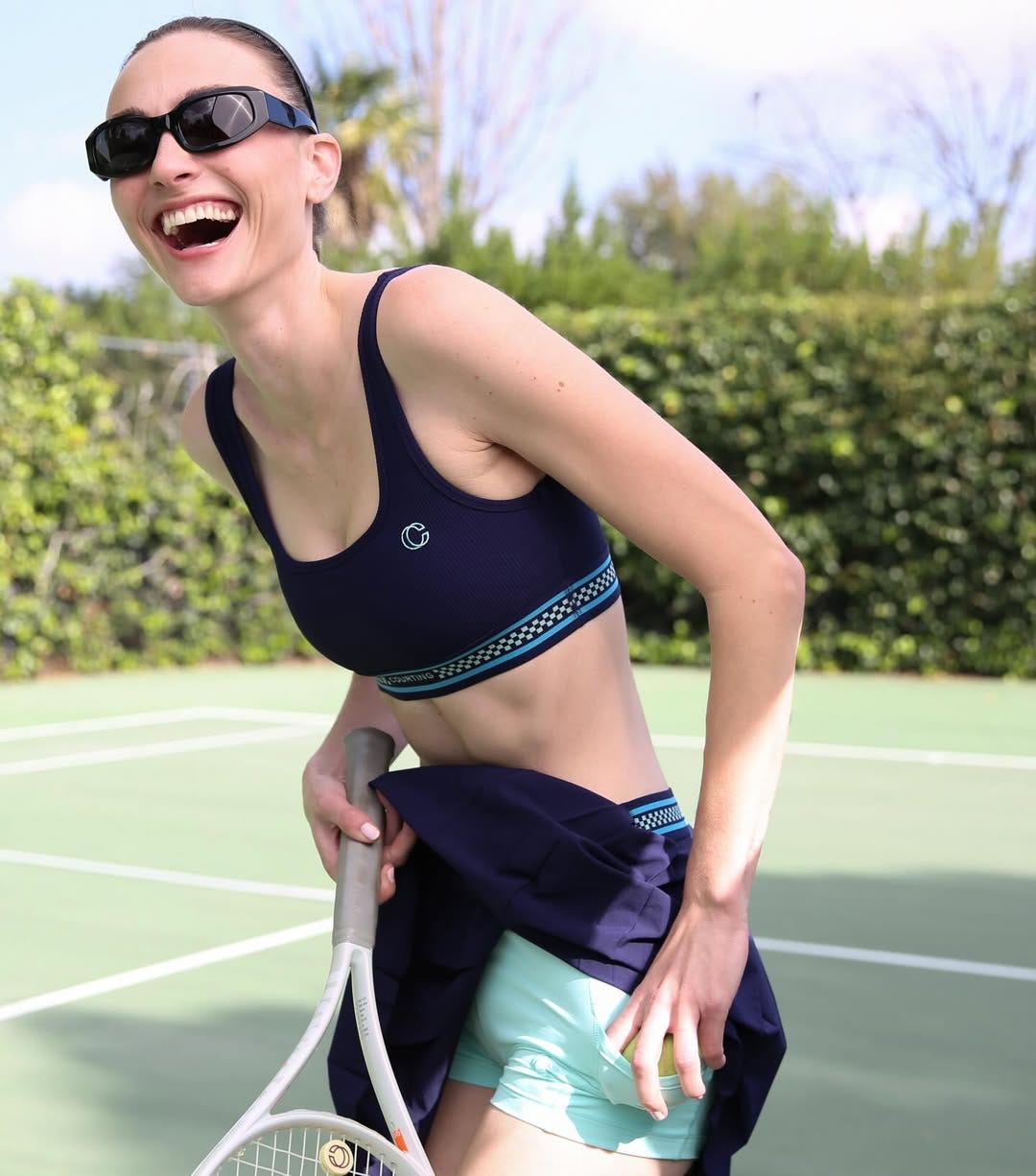
They spent roughly a year developing Courting’s debut collection, which launched last week with 50 pieces spanning dresses, moto-inspired jerseys, windbreakers and polos. The breadth is intentional: rather than testing the market with a single hero item, Kelly wanted to signal a fully formed lifestyle proposition from day one—a wardrobe for people who orbit tennis culture whether or not they’re playing daily.

For Port, many of the creative reference points centered on moments when tennis style has historically disrupted its own conventions. During the design phase she found herself reading Open, Andre Agassi’s autobiography, drawing inspiration from his willingness to challenge visual norms in the sport.
“He was stepping outside the boundaries before anyone in tennis was really doing that,” she said. “There was something very freeing about that approach.”
Kelly was drawn to a similar era through a different lens—the energy of late-’80s and ’90s New York (where she grew up) and a broader desire to create pieces that feel expressive rather than purely functional.
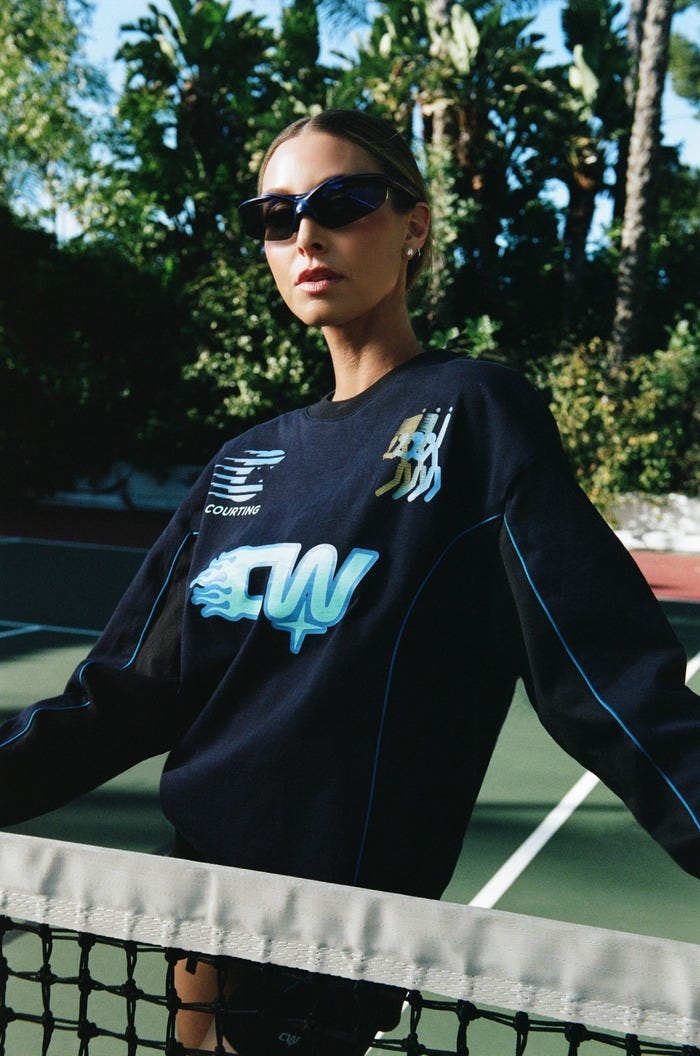
“I just wanted to make really fucking cool clothes,” she said. “Tennis itself doesn’t need reinventing. But the culture around it, that’s where there’s room.”
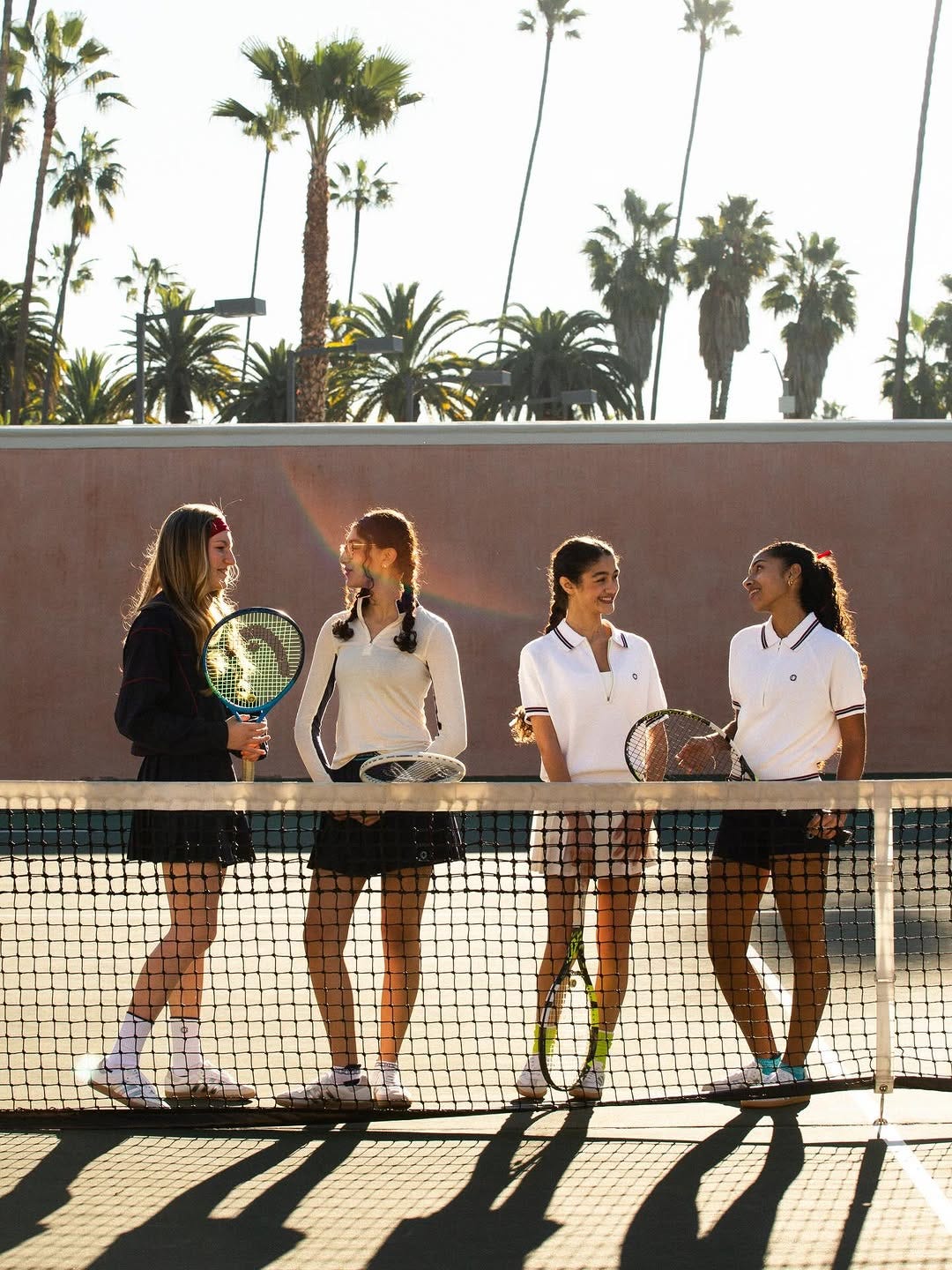
That mindset also shaped the brand’s early marketing decisions. Part of the launch campaign was shot on members of the Beverly Hills High School girls’ tennis team, who initially became informal product testers after Kelly began hitting with one of the players, a neighbor’s daughter who was hoping to earn a varsity spot.
“They were brutally honest about what worked,” she said, adding that she’s now in a group chat with them where they give constant feedback. “They’re basically our focus group.”
Kelly said the goal is to establish early brand affinity among high school and college players, consumers she believes are primed to develop long-term apparel loyalties as tennis participation expands. “You can really grow with that consumer.”
The youth-first strategy also informed how the brand thought about pricing. Most pieces sit around the $100 mark, with entry points near $60 and outerwear just above $200—a range the founders view as relatively accessible, though one that still positions the brand within the premium-leaning segment of the modern tennis apparel landscape. Kelly said the team intentionally resisted pushing prices higher despite elevated production costs tied to prioritizing higher-quality technical materials.
“There’s so much competition right now,” she said. “We wanted people to feel like they could actually buy into the brand and keep coming back.”
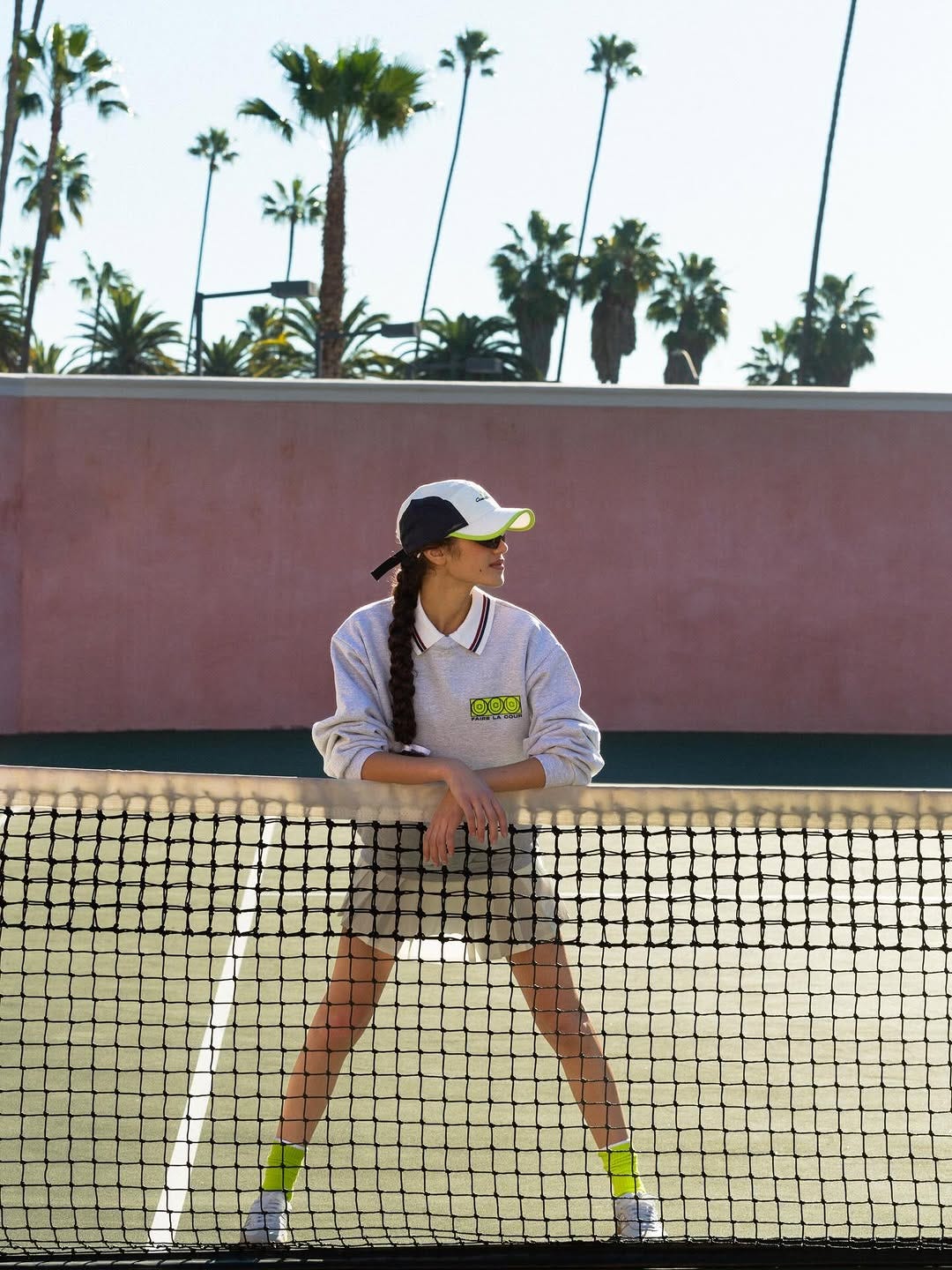
Port said early product feedback will play a key role in shaping future drops. “We already have additional designs ready,” she said. “But we really want to listen to what customers respond to before deciding how quickly to move.”
Although Courting’s storytelling leans fashion-forward, both founders emphasize that performance credibility still matters. Skirts feature brushed interior waistbands designed to minimize irritation, compression shorts incorporate silicone grippers to lessen constant readjustment, and fabrics were repeatedly tested during match play.
“We don’t want real-life performance to come second,” Kelly said. “Does it feel good when you sweat in it? Can you wash it a million times and still have it look like a brand new piece? That was our starting point.”

Longer term, the ambition extends beyond product into athlete partnerships and community building. The women speak openly about wanting to sponsor players and eventually collaborate with them on on-court styling, something they find lacking in the current sponsorship-limited tennis space.
They’re also thinking about how to activate beyond traditional tennis social hubs, particularly the often insular scene in Los Angeles, with plans for pop-ups, regional events and more unexpected hospitality concepts under consideration as the brand scales.
“We don’t just want to be popular on the coasts,” Kelly said, describing the brand’s ambition to reach tennis communities in less fashion-saturated markets.
The timing of Courting’s launch reflects a broader shift in how tennis’ cultural appeal is translating into consumer behavior, as aesthetic interest in the sport increasingly overlaps with active participation and lifestyle identity.
Early response to the collection, said Kelly, has been encouraging, with dresses, moto jerseys and windbreakers emerging as initial standouts.
Both women view the category’s momentum as more than cyclical hype.
“I don’t think this is a wave,” said Kelly. “I think tennis is going to keep getting bigger.”
For Courting, the challenge will be translating that macro belief into sustained brand equity in an increasingly crowded field. But at a moment when tennis style feels newly open to experimentation and consumers are actively searching for points of view, its attempt to balance credibility, accessibility and cultural relevance arrives at a particularly opportune time.

Thanks for reading! If you have tennis news or tips to share, email jessica@hard-court.com. For regular updates, follow Hard Court on Instagram.